

C7 vs. C9 Christmas Lights: Which Bulbs Look Best on a Roofline?
The basic difference: size
C7 and C9 bulbs share the same classic cone or "strawberry" shape. The number refers to the bulb's size: a C7 is roughly an inch tall and a bit under an inch wide, while a C9 is closer to an inch and a half tall and about an inch and a quarter wide. They also use different sockets, so C7 and C9 bulbs aren't interchangeable on the same strand.
That size gap sounds small in your hand, but it makes a big difference once the lights are 20 or 30 feet up on a roofline and you're looking at them from across the street.
Why C9 is the usual pick for rooflines
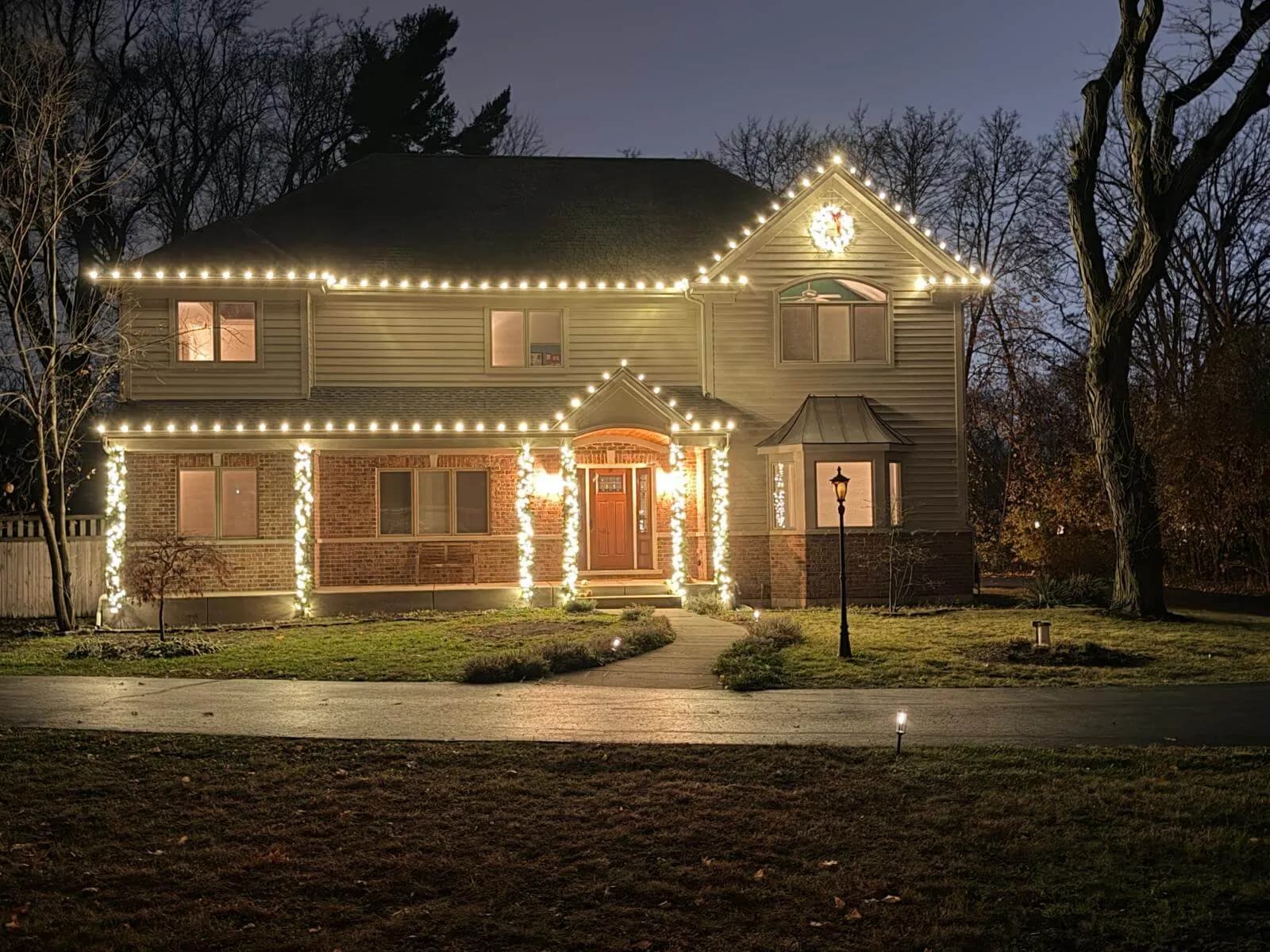
C9 bulbs are bigger and brighter, so they hold their shape from a distance. On a two-story home, a home set back from the road or a long ranch roofline, C9s give the bold, evenly spaced outline most people picture when they think of a professionally lit house.
Smaller bulbs can get lost at that height. A run of C7s along a high gutter line often reads as a thin, faint line from the curb rather than a crisp row of individual bulbs.
Where C7 bulbs look better
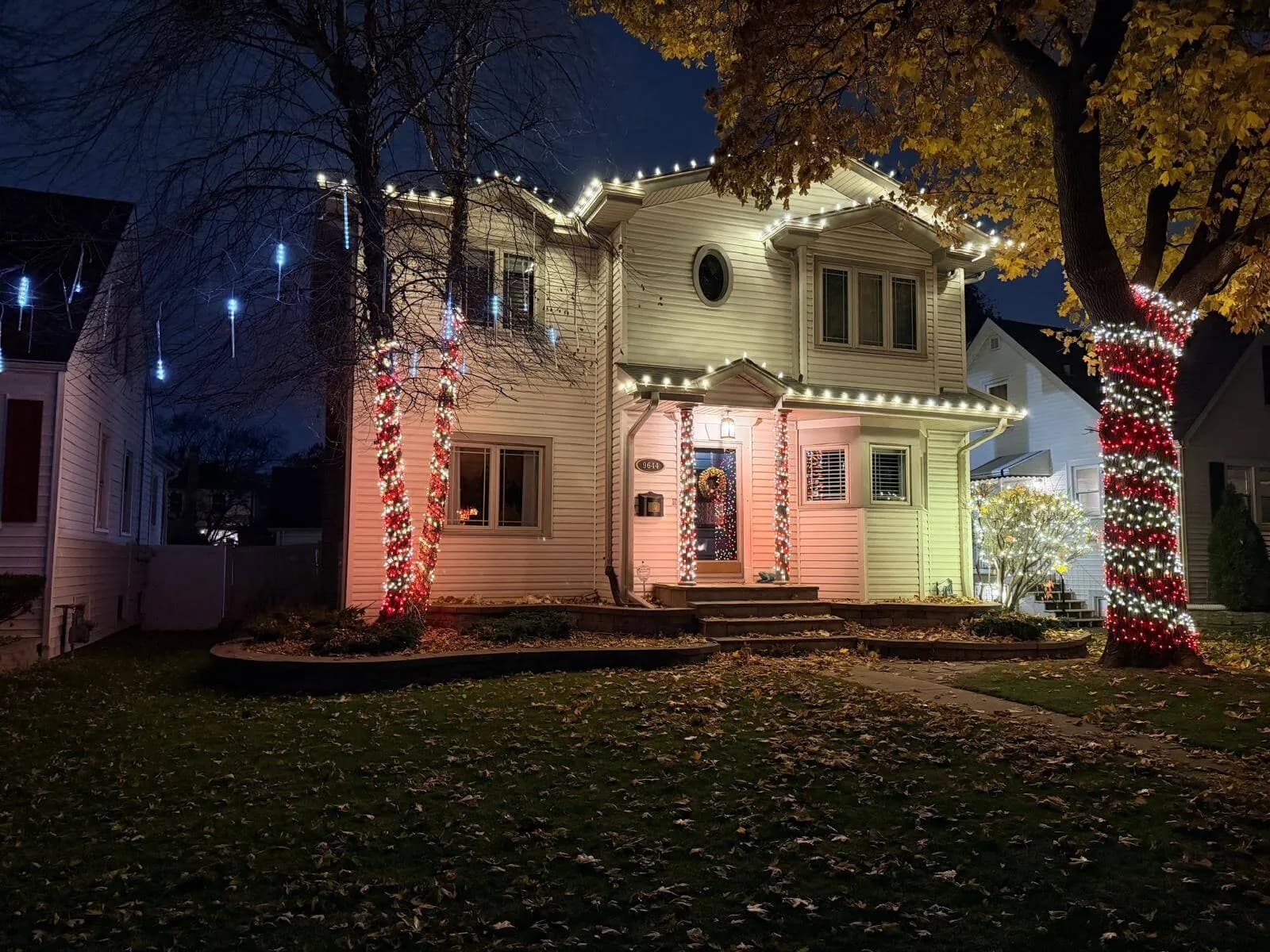
C7s shine where people see them up close. Porch railings, low eaves, garage door frames, window outlines, walkways and bushes are all places where a C9 can look oversized and a C7 looks in proportion.
They're also a good fit for smaller homes, single-story bungalows and townhouses, where the roofline is close to the street. A lot of displays use both: C9s on the main roofline and C7s on the lower details, so everything looks balanced instead of competing.
Spacing, color and LED vs. incandescent
Spacing matters as much as bulb size. Most roofline strands place bulbs about a foot apart, which gives a clean, even line. Closer spacing looks fuller but uses more bulbs; wider spacing can look sparse, especially with smaller C7s.
Warm white is the most popular choice for a classic look, and it pairs well with brick, stone and darker siding. Cool or pure white looks crisper on white or gray homes. Multicolor is a matter of taste; it tends to look best when the colors repeat in a steady pattern.
Today, almost everyone uses LED versions of both sizes. LED bulbs use far less electricity than old incandescent ones, run cooler, and hold up better in cold and wind. Many LED C9s use faceted or smooth shells that mimic the warm glow of the old glass bulbs.
Installation details that make either bulb look right
Even the right bulb looks messy if the line wavers. Professional installs use clips that hold each socket at the same angle along the gutter or shingle edge, so every bulb points the same way. Strands are cut to the actual length of each roofline section instead of bunching extra wire at the corners.
Gutters should be clean before lights go up, since clips attach to the gutter edge. Power planning matters too: runs need to reach outdoor outlets safely, and timers keep the display on a consistent schedule without anyone remembering to plug it in.
Get help choosing and installing your lights
Our roofline lighting uses professional outdoor LED C7 or C9 bulbs, and we'll recommend the right size for each part of your home. The holiday lighting service starts at $299 and covers custom design, installation, a secure electrical setup with timers, maintenance during the season, takedown after the holidays and optional storage. First-time customers get 25% off their first service.
EcoTouch Service installs holiday lighting across Chicago and the suburbs, from our Crystal Lake base in McHenry County to the North Shore and western suburbs. Installation calendars fill up quickly from late October on, so request a free quote soon to lock in a date.
Before & After
Holiday Display
 Before
 After
Holiday Display
 Before
 After
Need Holiday & Permanent Lighting in Chicago?
We handle this exact job every week across Chicago and the surrounding suburbs. Free, no-obligation quotes.
See our Holiday & Permanent Lighting service →